
Greek Island of Spinalonga: The Historic Fortress of Crete

Author
George | The Shiny Greece Team
Spinalonga is one of the most fascinating destinations in Crete, combining dramatic history, Venetian architecture, breathtaking sea views, and an atmosphere unlike any other Greek island. Although small in size, the Greek Island of Spinalonga attracts hundreds of thousands of visitors every year who come to discover its impressive fortress, learn about its remarkable past, and admire the stunning landscape of Mirabello Bay.

Greek Island of Spinalonga | Photo by: Ggia, 20090620 Spinalogka Elounta panoramic view from the mountain, CC BY-SA 3.0
Located just off the northeastern coast of Crete near Elounda and Plaka, Spinalonga offers far more than a typical sightseeing stop. It tells stories of powerful Venetian rulers, Ottoman settlers, and the people who lived there during one of the most challenging periods of modern Greek history. Walking through its stone streets feels like stepping into a living museum where every wall has a story to tell.
Whether you are planning your first visit or simply want to learn more about this unique destination, this guide explores everything you need to know about the Greek Island of Spinalonga, from its history and attractions to practical travel tips.
Greek Island of Spinalonga: Where Is It?
The Greek Island of Spinalonga lies in the Gulf of Mirabello on the northeastern coast of Crete, approximately 12 kilometers north of Agios Nikolaos. Despite often being referred to as an island, Spinalonga is actually a small fortified islet covering just under nine hectares.
Today, visitors usually reach Spinalonga by boat from the nearby villages of Plaka, Elounda, or Agios Nikolaos. The short crossing offers beautiful views of the Cretan coastline, turquoise waters, and the imposing fortress rising above the sea.
Its strategic location made the island an ideal military outpost for centuries, allowing whoever controlled it to dominate one of Crete's most important natural harbors.
The History of the Greek Island of Spinalonga
Venetian Fortress and Maritime Power
The story of Spinalonga began long before it became famous as a leper colony. During Venetian rule over Crete, military engineers recognized the island's strategic importance. In 1579, construction began on one of the Mediterranean's strongest sea fortifications.
The impressive defensive walls, bastions, tunnels, and cannon positions protected the entrance to Elounda Bay and helped safeguard Venetian trade routes throughout the eastern Mediterranean.
Even after much of Crete fell to the Ottoman Empire in the seventeenth century, the Venetians managed to retain control of Spinalonga for several decades because of its exceptional defenses.
Ottoman Settlement
The Ottoman Empire gained control of Spinalonga in 1715. During this period, the island evolved from military fortress into settlement. Ottoman families built homes, shops, warehouses, mosques, and public buildings within the fortress walls.
The narrow streets visitors walk today largely follow the layout established during this era.
The Leper Colony
Perhaps the most well-known chapter in the island's history began in 1903, when Spinalonga became Greece's official leper colony.
People diagnosed with Hansen's disease were transported from across Greece to live on the island. Although initially conditions were extremely difficult, the residents gradually created a functioning community with homes, shops, cafés, churches, schools, and even entertainment venues.
Medical care improved significantly after World War II, especially following the discovery of effective treatments for leprosy. In 1957, the colony officially closed, marking the end of one of the most emotional chapters in Greek social history.
Why the Greek Island of Spinalonga Is So Famous
Several factors have made Spinalonga one of Greece's most visited historical sites.
First, its exceptionally well-preserved Venetian fortress remains one of the finest examples of Renaissance military architecture in the eastern Mediterranean.

Greek Island of Spinalonga | Photo by: Malamant, Spinalonga, marked as public domain, more details on Wikimedia Commons
Second, its history as a leper colony has inspired countless books, documentaries, and television productions. Victoria Hislop's internationally bestselling novel The Island introduced millions of readers worldwide to Spinalonga's remarkable story.
Finally, the island's spectacular natural setting makes every visit unforgettable. Crystal-clear waters surround the fortress, while the mountains of eastern Crete create a dramatic backdrop.
Top Things to See on the Greek Island of Spinalonga
Venetian Defensive Walls
The massive stone fortifications remain the island's most striking feature. Walking along the walls provides magnificent panoramic views across Mirabello Bay and neighboring Crete.
The Main Gate
Entering through the historic tunnel immediately transports visitors into another era. The entrance once served as the primary access point for soldiers, merchants, and later, residents.
The Old Market Street
One of the island's best-preserved streets still features stone buildings that once housed grocery stores, cafés, workshops, and homes.
Many structures retain original architectural details that illustrate everyday life during both Ottoman and leper colony periods.
Hospital Buildings
Several restored buildings explain how medical services operated on the island. Information panels help visitors better understand the daily realities faced by residents.
Church of Saint Panteleimon
Dedicated to the patron saint of healing, this small church became an important place of worship and hope for many of the island's inhabitants.
Visiting the Greek Island of Spinalonga
Best Time to Visit
Spring and autumn offer ideal weather with pleasant temperatures and fewer crowds.
Summer remains the busiest season, especially during July and August. Visiting early in the morning often provides a quieter experience before larger tour groups arrive.
Boat Departures
Regular boats depart from:
Plaka (shortest crossing)
Elounda
Agios Nikolaos
The journey itself becomes part of the whole experience, offering excellent opportunities for photography.
Walking Around the Island
Exploring Spinalonga involves walking on uneven stone paths and climbing some steep sections of the fortress.
Comfortable walking shoes, sunscreen, water, and a hat are highly recommended, particularly during the warmer months.
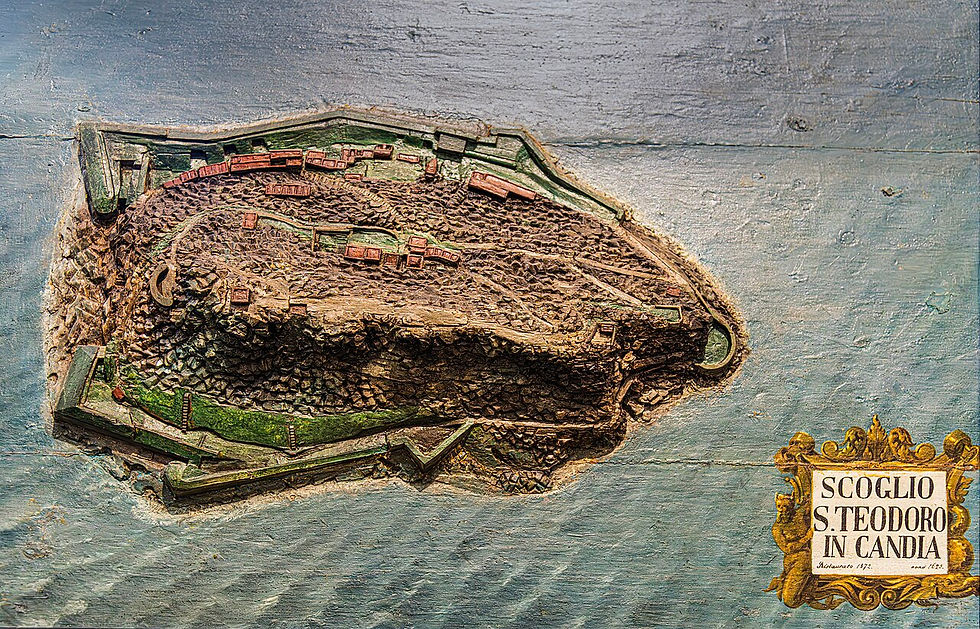
The Fortress of Spinalonga | Image by: anonymous artist QS:P170,Q4233718 Didier Descouens, Forteresse de Spinalunga, CC BY-SA 4.0
Nearby Attractions Worth Exploring
A visit to Spinalonga pairs perfectly with several nearby destinations.
Plaka
The charming fishing village of Plaka serves as the closest departure point to the island. Waterfront tavernas offer fresh seafood and spectacular views toward Spinalonga.
Elounda
Known for luxury resorts and beautiful beaches, Elounda combines traditional Cretan charm with modern hospitality.
Agios Nikolaos
This picturesque coastal town features Lake Voulismeni, lively cafés, museums, boutique shopping, and an attractive marina.
Kolokytha Beach
One of the area's most beautiful beaches, the Kolokytha Beach, offers crystal-clear waters perfect for swimming after visiting Spinalonga.
Architecture and Archaeological Significance
The architecture of the island of Spinalonga reflects multiple civilizations that shaped Crete over several centuries.
Venetian military engineering dominates the upper sections, featuring bastions designed to withstand artillery attacks.
Lower areas reveal Ottoman residential architecture, while twentieth-century additions from the leper colony illustrate the gradual transformation of the settlement into a functioning community.
Because these historical layers remain remarkably intact, Spinalonga serves as an invaluable archaeological and cultural site.
Local Legends and Cultural Importance
Like many historic Greek islands, Spinalonga has inspired numerous local legends.
Stories speak of hidden Venetian treasures buried beneath the fortress, secret escape tunnels leading to the mainland, and ghostly echoes from the island's abandoned streets.
Although these tales belong more to folklore than documented history, they contribute to the island's mysterious atmosphere and enduring appeal.
Today, Spinalonga also symbolizes resilience, dignity, and hope. Rather than focusing solely on suffering, modern interpretations increasingly highlight the strength and solidarity shown by those who built meaningful lives under extraordinary circumstances.
Photography Tips
The island provides exceptional photography opportunities throughout the day.
Morning light beautifully illuminates the eastern walls, while afternoon sunlight enhances the warm colors of the stone buildings.

Inside the Greek Island of Spinalonga | Photo by: Pumpel43, Spinalonga, verfallene Häuser 1980, cropped by Shiny Greece, CC BY-SA 4.0
Wide-angle lenses capture impressive fortress architecture, whereas telephoto lenses highlight details such as old doorways, defensive towers, and mountain landscapes across Mirabello Bay.
Drone photography is generally prohibited because Spinalonga is an important archaeological site.
Practical Tips for Visitors
To make the most of your visit:
Book boat tickets early during peak summer months.
Wear comfortable shoes suitable for stone pathways.
Carry drinking water, especially in summer.
Allow at least two to three hours to fully explore the island.
Read the information panels throughout the site to better appreciate its remarkable history.
Consider combining your visit with lunch in Plaka or Elounda.
A Journey Through Centuries of Cretan History
The Greek Island of Spinalonga is far more than an abandoned fortress in the sea. It represents centuries of military strategy, cultural exchange, human endurance, and historical transformation. From its imposing Venetian walls and Ottoman settlement to its internationally known leper colony, every corner reveals another chapter of Crete's remarkable past.
Today, visitors leave with far more than photographs. They gain a deeper understanding of resilience, community, and the enduring power of history. Whether you are passionate about archaeology, architecture, culture, or simply discovering extraordinary places, the Greek Island of Spinalonga remains one of the most unforgettable destinations in Greece.


I visited Spinalonga last year and absolutely loved it! Such a fascinating place, full of history, atmosphere, and beautiful sea views!